

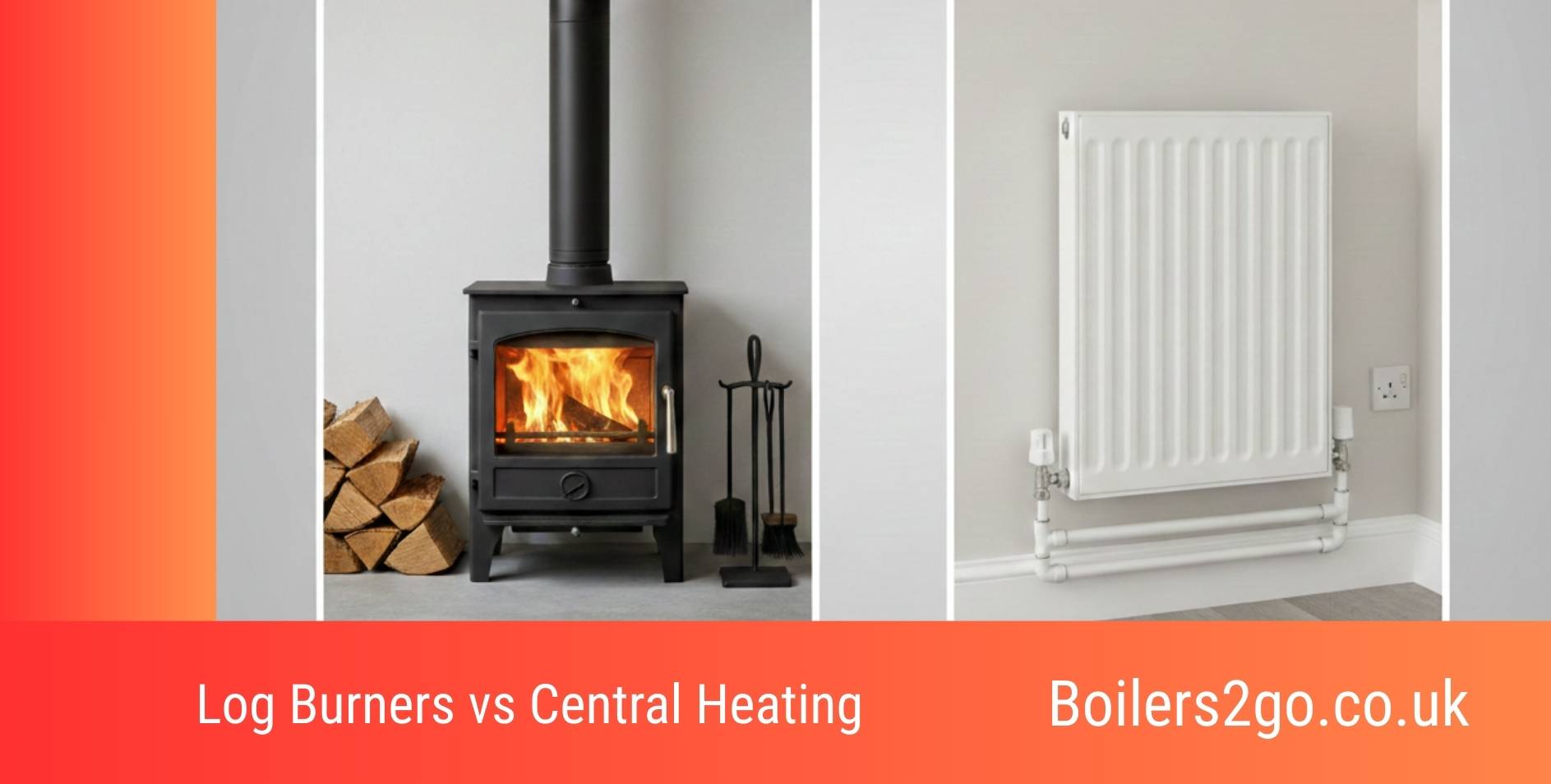
Log burners have made a big comeback in UK homes — partly for the cosy factor, partly for bill-cutting, and partly as a hedge against rising energy prices. But while a stove can absolutely reduce heating costs in the right setup, central heating still does the heavy lifting for whole-home warmth in most properties.
The real question isn’t log burner or central heating — it’s how they fit together, how much they cost to run in real life, and whether a stove genuinely suits your home, lifestyle, and local rules.
Log Burner vs Central Heating Running Costs
On paper, logs and gas don’t look wildly different per kilowatt hour. In practice, they’re used very differently.
A modern, efficient log burner typically costs around 10–20p per kWh, depending on whether you buy kiln-dried logs, seasoned hardwood in bulk, or premium briquettes.
Mains gas for central heating usually lands closer to 7–10p per kWh, depending on tariff and caps.
The key difference is coverage.
A log burner usually heats one main room, often for a few evening hours.
Central heating spreads heat across the whole home — bedrooms, bathrooms, hallways — and usually provides hot water at the same time.
Many UK households report saving a few hundred pounds per year by lighting a stove in the living room and turning the thermostat down elsewhere. Figures between £250 and £700 a year are commonly mentioned. That saving tends to disappear, however, if logs are bought in small retail nets or at peak winter prices, especially in urban areas where wood fuel costs more.
Bottom line:
A stove can reduce central heating run time — but it rarely replaces it completely.
Log Burner vs Central Heating: Upfront and Ongoing Costs
Installing a modern, compliant log burner in the UK is no longer a cheap weekend project.
Once you factor in the stove itself, chimney liner or twin-wall flue, hearth upgrades, labour, and certification, most homeowners now spend between £1,200 and £4,500, with a national average around £2,400–£2,500. London and the South East often sit higher; northern regions slightly lower. For comparison, our guide to central heating installation costs covers what a new system involves.
Ongoing costs include:
-
Chimney sweeping once or twice a year (typically £50–£100 per visit)
-
Occasional servicing and rope seal replacement
-
Wood fuel storage and handling
By contrast, most homes already have central heating installed. The ongoing costs are mainly fuel and an annual boiler service — usually £80–£150 — with no daily hands-on effort. Our guide to central heating running costs covers practical ways to bring them down.
If you already rely on radiators for whole-home heat, a log burner is best viewed as an addition, not a replacement.
The Strengths and Limits of Log Burners
A stove produces intense, localised heat. A living room with a log burner often feels warmer and more comfortable than the same room heated by radiators alone — even at a lower thermostat setting.
For households that:
-
Spend most evenings in one main room
-
Can buy logs cheaply in bulk or season their own
-
Value heat during power cuts
-
Want visual warmth and atmosphere
A stove can be genuinely worthwhile.
But log burners also bring compromises. They heat one part of the house, require regular refuelling and cleaning, need safe storage, and come under increasing air-quality scrutiny. In many towns and cities, only DEFRA-approved stoves can legally burn wood.
Why Central Heating Still Wins for Most Homes
Gas central heating remains the most practical option for whole-house comfort in the UK. Off the gas grid, LPG is the closest equivalent, and our comparison of natural gas boilers vs LPG boilers sets out how their running costs differ.
It offers:
-
Automatic, thermostatically controlled warmth across multiple rooms
-
Zoning via thermostats and radiator valves
-
Hot water from the same system
-
Predictable running costs at scale
For properties on the gas grid, it’s still usually the lowest-cost way to heat an entire home over a full winter, especially where heat demand is high.
What central heating lacks is the emotional warmth of a fire — which is exactly why many homes combine both.
Hybrid Heating: Using a Log Burner With Central Heating
For a large number of UK households, the best setup isn’t either–or.
A modern, efficient boiler provides background warmth and hot water across the house.
A small EcoDesign log burner in the main living space delivers targeted heat, comfort, and occasional savings.
Used sensibly, this hybrid approach gives:
-
Lower boiler run time
-
A warmer main room without overheating bedrooms
-
Backup heat during outages
-
Flexibility rather than reliance on one system
UK Log Burner Regulations in 2026
Installing a wood-burning stove in the UK is tightly regulated.
All new stoves must meet EcoDesign standards, which limit emissions and set minimum efficiency. In smoke-control areas (most towns and cities), only DEFRA-approved appliances can legally burn wood.
Installation must comply with Building Regulations Approved Document J. Most homeowners use a HETAS-registered installer, who can self-certify the work and issue the compliance certificate needed for insurers and future buyers.
Flue sizing, chimney lining, clearances from combustibles, hearth construction, and termination height are all prescribed. Cutting corners here can invalidate insurance or trigger enforcement issues later.
Log Burner Installation Costs Breakdown
A typical installation breaks down roughly like this:
-
Stove: £500–£1,500 (designer models higher)
-
Installation labour: £500–£1,500
-
Chimney liner or twin-wall flue: £300–£2,000
-
Hearth and surround: £200–£1,000+
Annual chimney sweeping and maintenance add modest ongoing costs, but these are part of owning a solid-fuel appliance safely.
High-Efficiency Log Burner Brands in the UK
Modern stoves are far cleaner and more efficient than older models. UK-focused brands consistently praised for low emissions and high efficiency include:
-
Charnwood – very high efficiency, often above 85%, strong eco credentials
-
Stovax – reliable DEFRA-approved ranges with good combustion control
-
Arada – solid value, high efficiency, smoke-control-area friendly
-
Mazona – excellent efficiency-to-price ratio
-
Charlton & Jenrick / Parkray – advanced clean-burn designs
Look for EcoDesign-ready certification, DEFRA approval, and efficiencies above 80% for best results.
Log Burner or Central Heating: Which Should You Choose?
A log burner makes sense if:
-
You want targeted heat in one main room
-
You enjoy the ritual and aesthetics
-
You can source logs affordably
-
You want backup heat during outages
Central heating remains the better choice if:
-
You want consistent warmth everywhere
-
You value automation and minimal effort
-
You’re on mains gas and want the lowest whole-house running cost
For most UK homes, central heating does the work — and a log burner adds comfort, resilience, and flexibility rather than replacing it.
Log Burners vs Central Heating: Final Thoughts
Log burners aren’t a magic replacement for central heating — but used intelligently, they can complement it beautifully.
The homes that benefit most aren’t chasing an either–or decision. They’re choosing the right heat, in the right place, at the right time — and that’s where both systems shine together.

I’m Penny North, a home energy heating expert. My mission is to demystify new boilers and complex heating systems to help you achieve a warm, cosy home with lower energy bills and a smaller environmental footprint.