

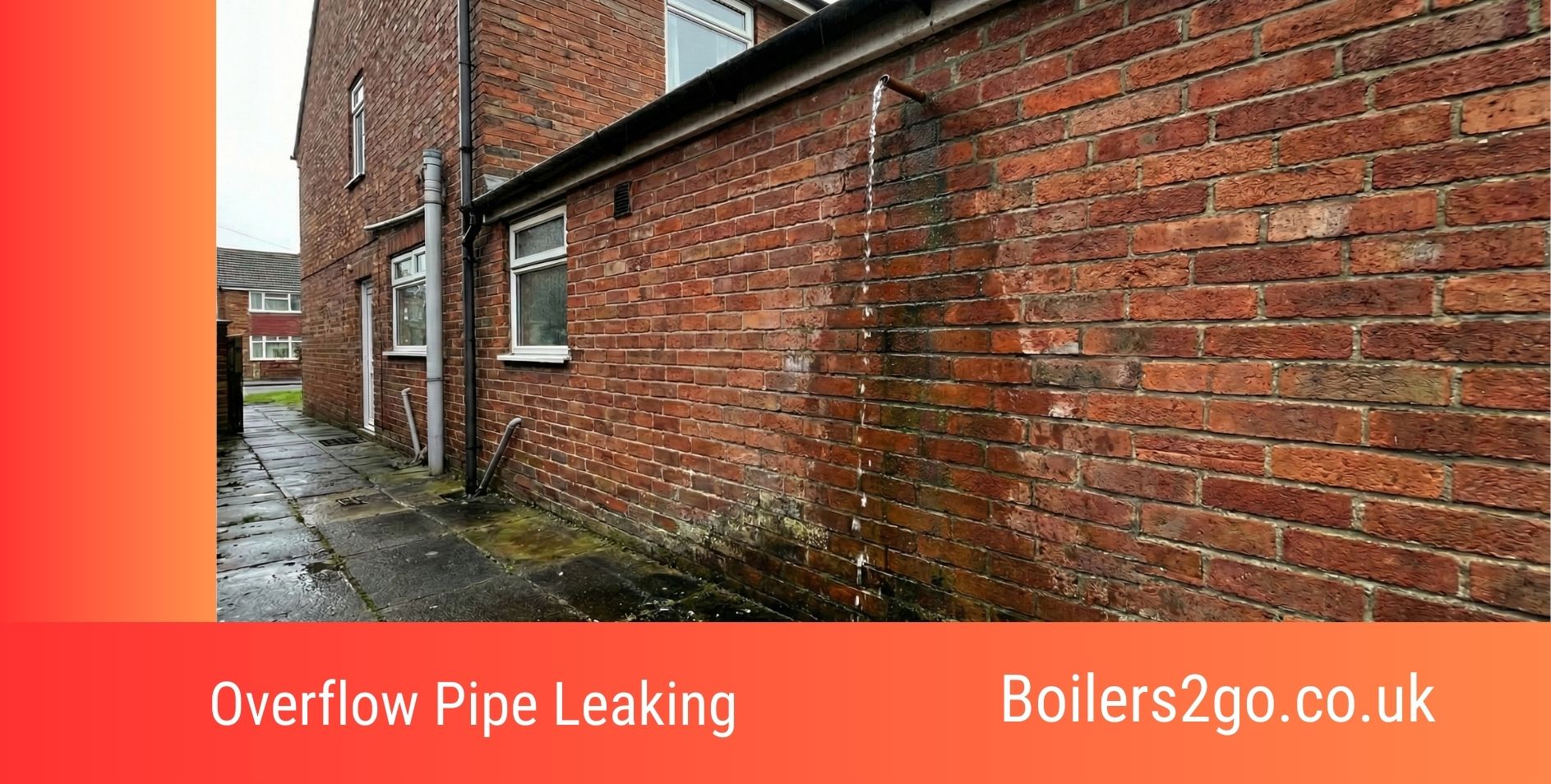
An overflow pipe leaking from a boiler or home heating system needs addressing promptly to avoid water damage to the property or further problems with the heating setup.
For UK homeowners and landlords, understanding this common problem helps keep a combi boiler, system boiler, or conventional setup running safely and efficiently. This guide covers what typically causes it and clear, practical fixes for each.
If pressure faults keep coming back, a boiler cover, repair and annual service plan bundles repairs and servicing together.
What Causes Overflow Pipe Leaking?
Overflow pipe leaking can stem from several underlying issues in a heating system, ranging from simple pressure imbalances to component failures. Many of these are pressure-related faults also covered in our guide to common boiler problems, which is useful if the boiler is showing other symptoms too.
The sections below cover the main causes in detail, followed by step-by-step fixes for UK homeowners and landlords. Some solutions are DIY-friendly, but safety comes first, so a professional should always be consulted if there is any doubt.
Get a quote today and take the stress out of replacing your boiler. At Boilers2Go, we offer fast, reliable installation across the UK - often as soon as the next day. 
Need a new boiler?
High Boiler Pressure
High boiler pressure is one of the most frequent reasons for an overflow pipe leaking, often resulting from overfilling the system or the natural expansion of water as it heats up.
In a typical UK central heating setup, the ideal pressure is between 1 and 1.5 bar when cold, rising slightly to around 2 bar when hot. If it climbs above 3 bar, the pressure relief valve opens to release water through the overflow pipe, preventing bursts or worse.
How to Fix High Boiler Pressure
- Check the boiler’s pressure gauge, usually located on the front panel. If it reads above 2 bar, bleed the radiators to release the excess pressure.
- Turn off the boiler, locate the bleed valve on each radiator starting upstairs, and use a radiator key to open it slightly until water stops hissing out. Catch the water in a towel or container.
- Recheck the gauge and repressurise using the filling loop if it drops below 1 bar.
Persistent high pressure over several days can point to a deeper issue, such as a faulty filling loop, so it is worth monitoring closely rather than repeating the same fix repeatedly.
Faulty Pressure Relief Valve
A faulty pressure relief valve is another common cause of overflow pipe leaking, where the valve fails to seal properly after activation or simply wears out over time.
The PRV is a crucial safety device in UK boilers that automatically opens to discharge water when pressure builds too high, but sediment, corrosion, or age can cause it to stick open or leak intermittently even when pressure is otherwise normal.
How to Fix a Faulty Pressure Relief Valve
Fixing a faulty pressure relief valve typically requires professional intervention, though it can be tested first:
- Isolate the boiler, locate the PRV, often near the overflow pipe exit, and gently twist the cap to release a small amount of water. If it does not reseal or continues dripping, replacement is needed.
- Never attempt to repair the valve directly, since it involves gas-safe components. A Gas Safe registered engineer should replace it, typically costing £100 to £200 including parts and labour.
Faulty Expansion Vessel
A faulty expansion vessel often causes overflow pipe leaking by failing to absorb the natural expansion of heated water, which leads to pressure spikes.
In modern UK boilers, the expansion vessel is a diaphragm-filled tank that accommodates changes in water volume. Over time, the diaphragm can rupture or lose its air charge, forcing excess pressure through the PRV and out the overflow pipe.
How to Fix a Faulty Expansion Vessel
- Check the vessel’s air pressure using a tyre pressure gauge on its Schrader valve, much like a car tyre. It should read around 0.75 to 1 bar when the system is depressurised.
- Top it up with a bicycle pump if low. If the diaphragm is damaged, indicated by water coming out when pressing the valve, the vessel needs recharging or replacing.
- This is a job for a qualified engineer, since it may require draining the system. A new expansion vessel typically costs £150 to £450 for a standard UK home, depending on access and boiler model.
Filling Loop Letting Water In
A filling loop letting water in is a straightforward yet often overlooked cause of overflow pipe leaking. The loop is used to top up the system’s water and, if left partially open or faulty, keeps adding water and building pressure.
In UK heating systems, the filling loop connects mains water to the boiler circuit and should be fully disconnected after use to prevent unintended pressurisation.
How to Fix Filling Loop Issues
- Locate the loop, usually two valves with a flexible hose near the boiler, and ensure both valves are tightly closed by turning them clockwise until firm.
- Check for worn washers or valves if leaking persists, and replace them if needed. This is often a simple DIY task using basic tools such as a spanner.
- For combi boilers common in UK flats, a faulty internal filling loop should be inspected by a Gas Safe engineer to avoid voiding the warranty.
Limescale Buildup
Limescale buildup is a prevalent issue in hard water areas of the UK, causing overflow pipe leaking by obstructing components like the heat exchanger or PRV, which leads to uneven pressure distribution.
Limescale, formed from mineral deposits in water, accumulates over time in boilers, reducing efficiency and forcing the system to overwork, which can trigger the overflow.
How to Fix Limescale Buildup
A system flush is the standard fix for limescale buildup:
- Add a descaling chemical, available at UK hardware stores, to the system via a radiator or filling point. Run the heating for a few hours, then drain and refill with clean water.
- For severe cases, a professional power flush uses high-pressure equipment to clear deposits, typically costing £350 to £850 depending on the number of radiators.
- Installing a magnetic filter or water softener helps prevent recurrence, particularly in hard water regions such as the South East of England.
How to Prevent Overflow Pipe Leaking
Preventing overflow pipe leaking involves regular maintenance of the boiler and heating system to keep pressure stable and components in good condition.
Scheduling annual boiler servicing by a Gas Safe engineer, checking system pressure monthly, and installing a water softener in hard water areas all help minimise the risk of limescale-related faults.
It is also worth making sure the filling loop is always disconnected after use, and insulating external pipes to prevent freezing, which can indirectly cause pressure issues that end up forcing water out through the overflow.
When to Call a Gas Safe Engineer About a Leaking Overflow Pipe
A Gas Safe engineer should be called immediately if overflow pipe leaking is accompanied by unusual boiler noises, complete loss of heating, or if DIY fixes do not resolve the issue within a day, since these could indicate serious faults such as a gas leak or system failure. Pump noise for a few minutes after the burner switches off is usually normal, though, and our guide to pump overrun on a boiler explains when it points to a fault.
In the UK, only professionals listed on the Gas Safe Register can legally work on gas appliances, so it is always worth confirming registration before any work begins, prioritising safety over cost-saving.
Related Overflow Pipe and Boiler Pressure Guides
- Why boiler pressure is too high
- Boiler pressure release valve
- Boiler expansion vessel
- Boiler filling loop
Overflow Pipe Leaking: FAQs
Is It Safe to Ignore a Small Drip from the Overflow Pipe?
No, even a small drip from the overflow pipe should not be ignored, as it could escalate into water damage or indicate rising pressure that risks damaging the boiler. It is always worth investigating promptly rather than waiting to see if it stops.
How Does Hard Water in the UK Affect Overflow Pipe Issues?
Hard water in UK regions such as London or the Midlands accelerates limescale formation, which clogs boiler parts and leads to overflow pipe problems. Using inhibitors can mitigate this without needing a full system overhaul.
Can Weather Conditions Cause Overflow Pipe Leaking?
Yes, extreme cold weather can freeze the overflow pipe, causing blockages that back up water into the system and trigger leaks once thawed. Insulating exposed pipes with foam lagging helps prevent this in winter.
What’s the Difference Between Overflow Pipe Leaking and Condensate Pipe Issues?
Overflow pipe leaking usually involves pressure-related discharges from the PRV, while condensate pipe issues in condensing boilers stem from acidic wastewater drainage problems, such as blockages or improper installation.
How Often Should Boiler Pressure Be Checked to Avoid Overflow Problems?
Checking boiler pressure at least once a month, especially during the heating season, helps catch early signs of imbalances that could lead to overflow pipe leaking and extends the system’s overall lifespan.
How Much Does It Typically Cost to Fix an Overflow Pipe Leak?
Costs depend entirely on the cause. Closing a loose filling loop or bleeding radiators costs nothing if done safely at home, while component repairs such as a pressure relief valve or expansion vessel typically range from £100 to £450, and a full power flush for limescale or sludge runs to around £350 to £850.
Can a Leaking Overflow Pipe Cause Damage to a Property?
Yes. Left unaddressed, a leaking overflow pipe can cause staining, damp, or damage to brickwork and render where the pipe discharges, and repeated pressure venting inside the property can point to a fault that eventually causes a more serious leak indoors.
Get a quote today and take the stress out of replacing your boiler. At Boilers2Go, we offer fast, reliable installation across the UK - often as soon as the next day.
Need a new boiler?

I’m Penny North, a home energy heating expert. My mission is to demystify new boilers and complex heating systems to help you achieve a warm, cosy home with lower energy bills and a smaller environmental footprint.