

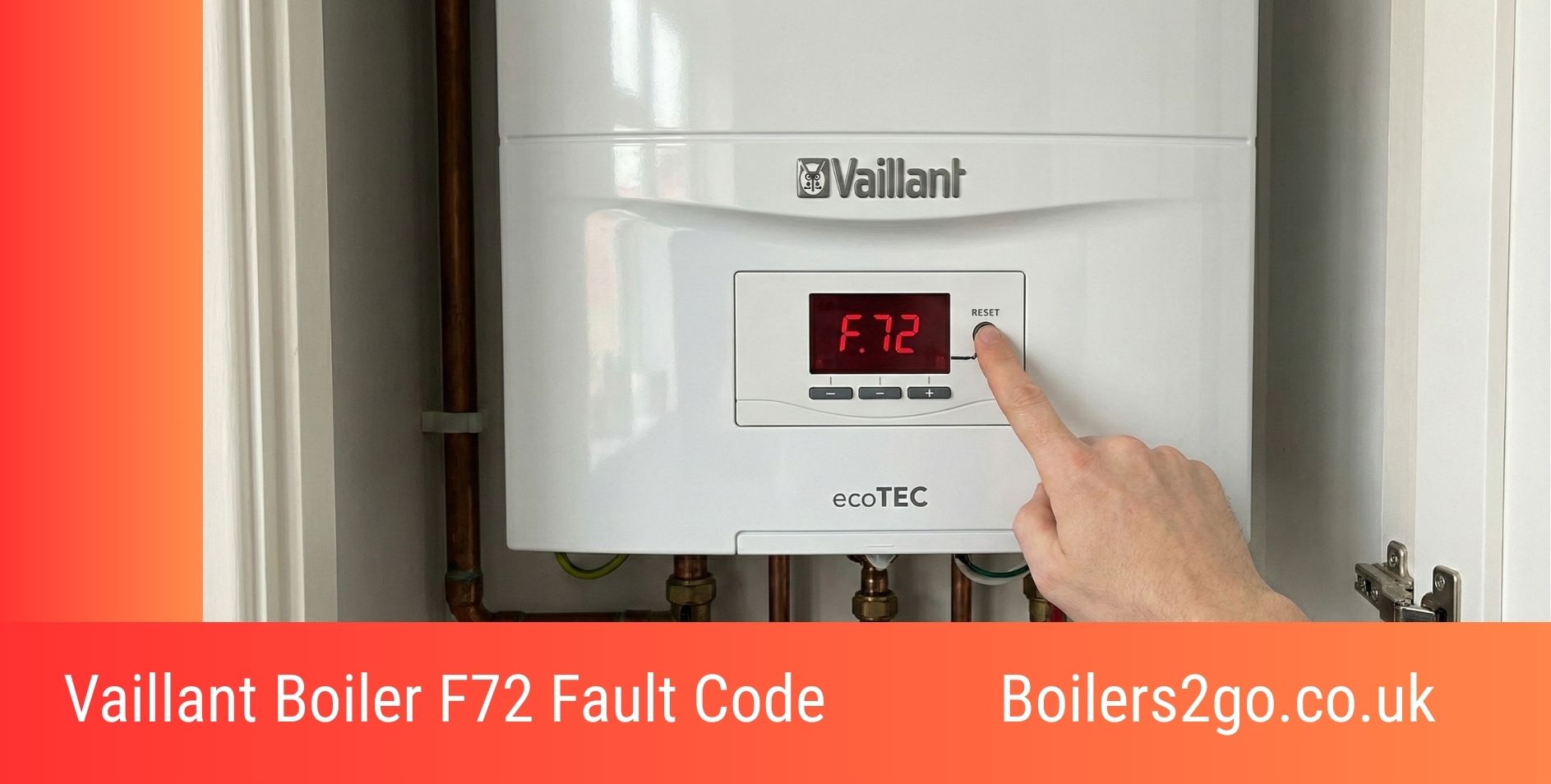
Your Vaillant boiler is showing the F72 fault code as a protective response, activating when it detects an abnormal temperature differential between the hot flow and cooler return pipes, safeguarding the heat exchanger from stress in your central heating appliance.
This error, frequently seen on ecoTEC, ecoFIT, and atmoTEC series combi boilers or system boilers, highlights a mismatch in temperature readings from the flow and return NTC thermistors, small sensors that monitor water temperatures in your home heating system.
In this guide, I’ll explain the Vaillant F72 error in plain terms, covering its meaning, common triggers like sensor failures or circulation glitches, and practical solutions.
While basic troubleshooting might resolve minor hiccups, gas boilers demand caution: enlist a Gas Safe registered engineer for any hands-on repairs to sidestep risks such as inefficient combustion or pressure imbalances in your domestic setup.
Get a quote today and take the stress out of replacing your boiler. At Boilers2Go, we offer fast, reliable installation across the UK - often as soon as the next day. 
Need a new boiler?
What Does the Vaillant Boiler F72 Fault Code Mean?
The Vaillant boiler F72 fault code means there’s a significant discrepancy in the temperature readings from the flow and return NTC sensors, typically over 30°C difference—preventing the boiler from operating safely and efficiently, often locking out the burner in condensing models. This issue can often be traced back to faulty sensors or wiring problems that disrupt the temperature readings. Additionally, in some cases, the Vaillant F62 fault code causes may also contribute to similar symptoms, necessitating a thorough inspection of the system. Addressing these discrepancies promptly is essential for restoring the boiler’s functionality and ensuring safe operation. Ignoring the F72 fault can lead to further complications, potentially resulting in more costly repairs. For those encountering related issues, a thorough understanding of the F83 Vaillant boiler fault code overview can help in diagnosing additional problems. Regular maintenance and timely repairs are crucial in preventing a breakdown and ensuring the longevity of the heating system.
Causes
Faulty Flow or Return NTC Thermistor
A faulty flow or return NTC thermistor, which measures water temperature in the primary circuit, sends incorrect data to the PCB, causing the F72 alert due to perceived overheating or undercooling in hard water areas prevalent across UK homes.
How to Fix It: Switch off power and inspect the sensors for visible damage like cracks, clean contacts if dusty. Use a multimeter to check resistance (around 10k ohms at room temperature); replace if off-spec with authentic Vaillant parts from approved suppliers.
You should leave installation to a Gas Safe engineer, who can calibrate during a service for £80-£150, ensuring warranty validity for landlords’ rental properties.
Wiring or Connection Problems
Wiring or connection problems, such as loose plugs or corroded leads from vibration and moisture, interrupt signals between thermistors and the control board, mimicking a temperature fault and triggering the F72 code in damp utility rooms common in older UK builds.
How to Fix It: Isolate electricity and gently reseat connections at the sensors and PCB, avoid forcing to prevent further damage. Dry any condensation with a soft cloth. For thorough checks, a qualified technician traces continuity and repairs or replaces harnesses, a quick £50-£100 fix that restores seamless operation without disrupting tenant heating.
Circulating Pump Issues
Circulating pump issues, like a seized impeller or reduced speed from wear, create uneven water flow, leading to excessive temperature gaps and the F72 error in the boiler’s hydraulic system, especially after years of heavy use in multi-occupancy rentals.
How to Fix It: Verify the pump is running by feeling for vibrations, tap lightly if stuck, or select a higher speed if variable. Bleed trapped air to aid flow. Persistent faults require pump head replacement by pros, often with efficient upgrades like Grundfos models, costing £200-£350 to boost long-term energy savings.
Airlocks or Blockages in the System
Airlocks or blockages in the system trap bubbles or debris, disrupting circulation and causing rapid temperature rises that flag the F72 code, a sneaky problem post-refilling or in sludge-prone pipes of unmaintained UK central heating networks.
How to Fix It: Bleed radiators from highest to lowest, refilling the system to 1-1.5 bar via the loop. Add a chemical inhibitor to deter buildup. For stubborn issues, a power flush by specialists clears the loop in a day, an investment under £500 that prevents efficiency losses for eco-focused homeowners.
Heat Exchanger Scale Buildup
Heat exchanger scale buildup from limescale in regions like the Midlands clogs channels, restricting flow and amplifying temperature differentials, indirectly prompting the F72 fault in high-output Vaillant boilers during peak demand. This issue becomes particularly evident when examining the vaillant boiler radiator symbol explanation, as users may misinterpret heating diagnostics due to scale-related inefficiencies. Regular maintenance and descaling are essential to mitigate the effects of limescale and ensure optimal performance. Without proper intervention, the risk of boiler damage and reduced efficiency increases significantly during high-demand periods.
How to Fix It: Dose with a descaler and circulate overnight before flushing. Install a water softener for prevention in hard areas. Severe cases need professional chemical cleaning, aligning with annual services to maintain ErP ratings and cut gas bills for property managers.
FAQs
How Does the Vaillant Boiler F72 Fault Code Affect Boiler Efficiency?
This error can drop your system’s seasonal efficiency by 5-15% through erratic cycling; addressing it promptly via sensor checks restores optimal modulation, supporting UK government’s push for low-carbon heating upgrades.
Are Vaillant F72 Errors More Prevalent in Certain Seasons?
Winter spikes in demand exacerbate flow issues, increasing occurrences by 25% per heating stats—pre-emptive bleeding in autumn helps, particularly for landlords in frost-vulnerable northern regions.
Can Upgrading to a Smart Thermostat Mitigate F72 Faults?
Integrated controls like Vaillant’s sensoCOMFORT balance loads to minimise differentials; pair with app monitoring for alerts, enhancing zoned heating without overwhelming the pump in smart homes.
What’s the Warranty Implication of Ignoring a F72 Code?
Repeated lockouts without service may void 5-10 year coverage; log resolutions in your service history to claim free thermistor swaps, a boon for homeowners navigating boiler finance schemes.
Does the F72 Vaillant Fault Link to Broader System Upgrades?
It often signals aging components, prompting full repipes or hybrid conversions—explore grants via the Boiler Upgrade Scheme for seamless transitions to heat pumps in eligible properties.

I’m Penny North, a home energy heating expert. My mission is to demystify new boilers and complex heating systems to help you achieve a warm, cosy home with lower energy bills and a smaller environmental footprint.