

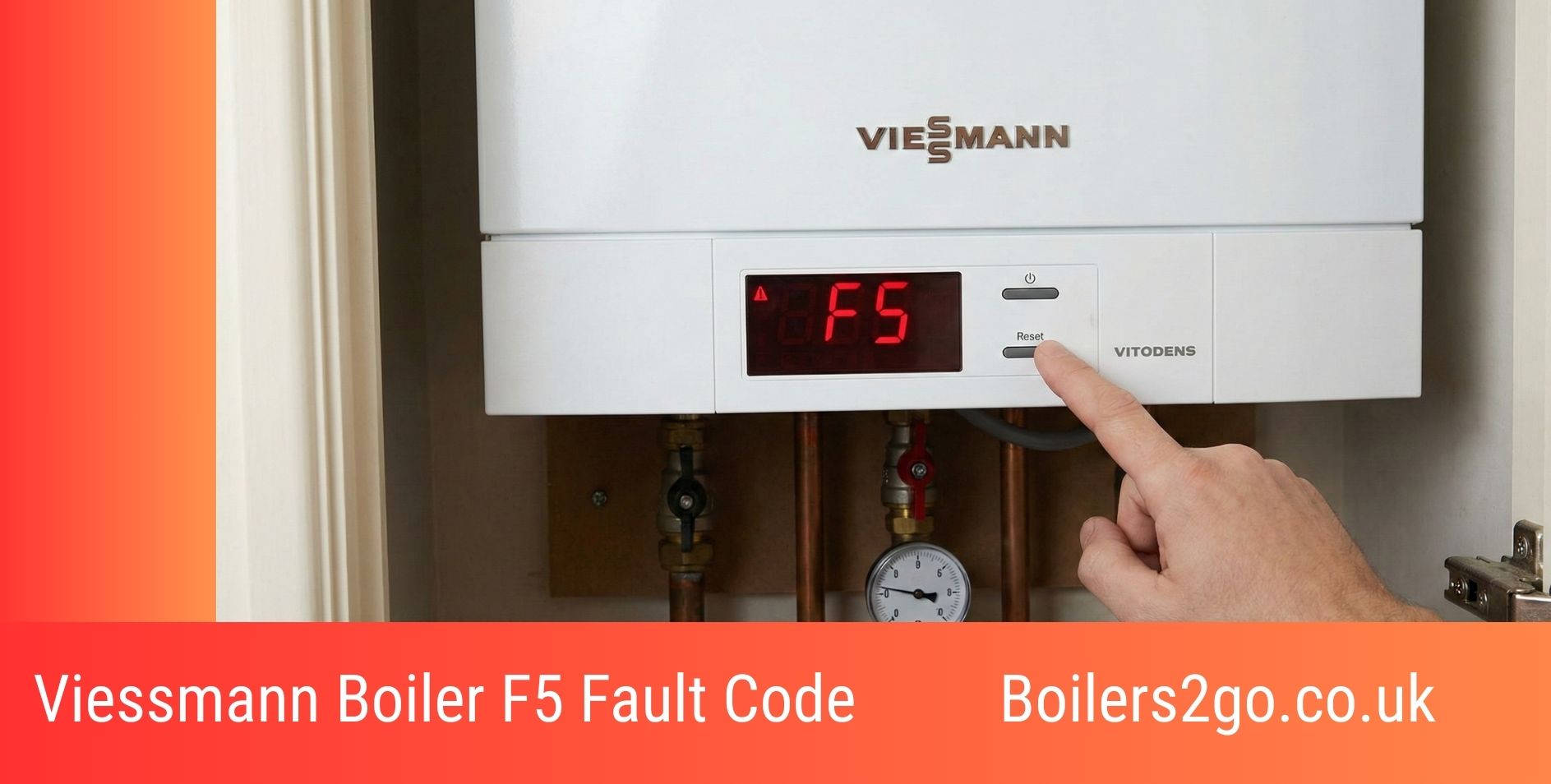
If you’re a UK homeowner or landlord staring at the dreaded Viessmann boiler F5 fault code flashing on your display panel, you’re not alone—it’s one of the more common error signals in Viessmann central heating systems, especially in models like the Vitodens 100 or 200 series.
In this guide, I’ll explain what the Viessmann boiler F5 fault code means, discuss its root causes, and walk you through practical fixes. Remember, while we’ll cover DIY-friendly steps where safe, working with gas appliances demands caution—always prioritise safety in your home heating setup.
What is the Viessmann Boiler F5 Fault Code?
The Viessmann boiler F5 fault code is an error signal displayed on the control panel of your boiler, indicating a problem with flame detection or air pressure regulation during the ignition sequence. If you encounter the F5 fault code, it is essential to troubleshoot both flame detection and air pressure issues to restore proper operation. Additionally, it’s worth noting that the viessmann boiler f1 fault code may also appear, indicating a different type of problem related to water temperature or sensor malfunction, which should be addressed separately. Regular maintenance and inspections can help prevent such issues from arising in the future. In addition to the F5 fault code, users should be aware of the potential for the viessmann boiler f2 fault code, which indicates a malfunction related to the temperature sensor or the return water temperature. Addressing these faults promptly ensures the boiler operates efficiently and safely. Keeping a record of any error codes can also assist technicians during maintenance checks, allowing for faster and more accurate repairs.
In simple terms, your boiler’s printed circuit board (PCB), the electronic brain that oversees operations, expects to see a stable flame once the burner ignites. When it doesn’t detect this properly, it triggers the F5 lockout to prevent unsafe operation, such as incomplete combustion that could release carbon monoxide into your living space.
This fault is particularly prevalent in Viessmann Vitodens models, where the air pressure switch plays a starring role. This small but crucial component monitors the flow of air and gas into the combustion chamber, ensuring the right balance for a clean, efficient burn.
If the switch fails to confirm adequate pressure, the PCB halts everything, displaying the Viessmann boiler F5 fault code to alert you. For UK homeowners, this often manifests as no heat or hot water, with the boiler entering a safety mode that requires a reset or professional intervention.
Think of it like your boiler’s built-in safety net: it’s designed to protect your household from potential hazards in the central heating system.
Unlike minor glitches, this code ties directly to core functions like gas valve operation and sensor feedback, making it a red flag for underlying issues in your domestic boiler setup. Early recognition can save you from escalating problems, such as reduced boiler efficiency leading to higher gas consumption.
What Causes the Viessmann Boiler F5 Fault Code?
The Viessmann boiler F5 fault code arises from interruptions in the flame sensing or air supply process, often linked to everyday wear in your home heating infrastructure.
These causes stem from the interplay between mechanical parts, gas flow, and environmental factors, affecting both owner-occupied homes and landlord-managed rentals where regular tenant turnover might delay maintenance.
Common triggers include faulty sensors, blockages, or supply inconsistencies, elements that disrupt the delicate equilibrium needed for safe combustion. Below, we’ll break down the primary culprits, providing context on how they impact your Viessmann boiler’s performance and why they matter for long-term reliability. These disruptions can lead to inefficiencies, such as increased fuel consumption or frequent shutdowns, which can further exacerbate the problems. Understanding common issues with Viessmann boilers is essential for homeowners to prevent costly repairs and ensure their heating systems operate smoothly. By identifying these issues early on, you can maintain optimal performance and extend the lifespan of your boiler.
Faulty Air Pressure Switch
A faulty air pressure switch is one of the most frequent triggers for the Viessmann boiler F5 fault code, as this component directly communicates with the PCB to verify safe operating conditions.
In Viessmann boilers, the switch detects differential air pressure created by the fan, confirming that exhaust gases can vent properly before allowing ignition. Over time, especially in older installations, corrosion, dust accumulation, or electrical wear can cause it to stick or send incorrect signals, mimicking low pressure even when everything else is fine.
For UK landlords, this is a sneaky issue in properties with high usage, where vibrations from nearby appliances or poor ventilation exacerbate switch degradation.
Homeowners might notice it after seasonal changes, like autumn leaves clogging external vents, indirectly stressing the switch. Without proper detection, the boiler assumes unsafe conditions and locks out, halting hot water production and central heating flow.
How to Fix a Faulty Air Pressure Switch
- To address a faulty air pressure switch causing the Viessmann boiler F5 fault code, start by isolating the boiler’s power supply at the fused spur and turning off the gas isolation valve for safety—this prevents any accidental ignition during inspection.
- Visually check the switch for visible damage like cracked housings or loose wiring connections; if you’re comfortable, gently clean contacts with a dry cloth to remove debris, but avoid solvents that could damage seals.
- Next, perform a multimeter test on the switch terminals: with the fan off, it should show an open circuit (infinite resistance); when energised, it closes (near-zero resistance). If readings are erratic, the switch needs replacement—a task for a Gas Safe registered engineer, as it involves accessing the combustion chamber.
They’ll source a compatible part (around £50-£100) and recalibrate the system, restoring flame detection. Post-fix, reset the boiler by pressing the reset button for 3-5 seconds and monitor for recurrence over 24 hours. This fix typically resolves 40% of F5 cases, ensuring your combi boiler resumes efficient operation without further lockouts.
Low or Inconsistent Gas Supply
Low or inconsistent gas supply triggers the Viessmann boiler F5 fault code by starving the burner of fuel, preventing stable flame formation that the detection system relies on. In UK homes, this often stems from partial blockages in the gas meter, external supply lines, or even supplier-side fluctuations during peak winter demand.
The air pressure switch, sensing inadequate gas flow as reduced combustion pressure, signals the PCB to shut down, protecting against incomplete burns that waste energy or pose CO risks.
Landlords in multi-occupancy buildings might encounter this if shared mains feeds are undersized, while homeowners could see it after DIY pipe alterations disrupt flow. Symptoms include intermittent ignition attempts, with the boiler clicking but failing to light, leading to cold radiators and lukewarm showers despite a healthy system pressure gauge reading 1-1.5 bar.
How to Fix Low or Inconsistent Gas Supply
- Fixing low or inconsistent gas supply behind the Viessmann boiler F5 fault code begins with a safe external check: ensure your gas meter shows no blockages and that the emergency control valve (ECV) near the meter is fully open—turn it parallel to the pipe.
If accessible, inspect the boiler’s gas inlet filter for sediment; a Gas Safe engineer can remove and clean it using compressed air, a quick 15-minute job that often restores pressure without parts replacement. - For deeper issues like meter faults, contact your gas supplier (e.g., British Gas or E.ON) for a free diagnostic visit—they’ll verify mains pressure meets the 21mbar minimum for Viessmann units.
If internal valves are culprit, the engineer will test and adjust the gas valve actuator, potentially replacing it (£150-£300 labour included). - After resolution, bleed the system to remove air pockets, repressurise to 1.2 bar, and test-run the boiler for 10 minutes. This targeted approach minimises downtime, keeping your home heating reliable and bills predictable.
Blocked or Dirty Burner Assembly
A blocked or dirty burner assembly causes the Viessmann boiler F5 fault code by obstructing gas-air mixture flow, resulting in weak or absent flames that the sensor can’t reliably detect.
In Viessmann boilers, the burner, a stainless steel heat exchanger component, accumulates limescale, soot, or debris from hard water areas common in regions like the South East or Midlands. This buildup, often from infrequent servicing, disrupts combustion efficiency, forcing the air pressure switch to report anomalies and trigger the lockout.
For homeowners in older Victorian properties, legacy pipework exacerbates this, while landlords face it in high-turnover rentals where tenants overlook annual checks. The result? Erratic heating cycles, unusual gurgling noises, and a lingering smell of unburnt gas, all hallmarks of impaired flame stability in your central heating boiler.
How to Fix a Blocked or Dirty Burner Assembly
- To fix a blocked or dirty burner assembly prompting the Viessmann boiler F5 fault code, first power down the boiler and allow it to cool fully to avoid burns from hot components.
A preliminary DIY step for confident users: access the burner via the front panel (consult your model-specific manual), and use a soft brush or vacuum to gently remove visible debris—never use water, as it risks corrosion in the heat exchanger.
However, thorough cleaning demands a Gas Safe engineer, who’ll disassemble the burner, soak it in descaling solution if limescale is present, and inspect for warping (£80-£150 for the service).
They’ll also check the igniter electrode for carbon deposits, cleaning or replacing as needed to ensure spark reliability. Reassemble, fire up the system, and run a full diagnostic cycle to confirm steady flame. Pair this with a magnetic system filter installation to catch future particulates, enhancing longevity for your Viessmann condensing boiler.
Faulty Flame Sensor
A faulty flame sensor leads to the Viessmann boiler F5 fault code by failing to confirm the presence of a proper ignition flame, causing repeated shutdowns even when combustion is occurring.
This electrode-like probe in Viessmann units detects ionisation from the burner flame via electrical current; oxidation, misalignment, or wiring faults from age or moisture ingress can interrupt this signal, fooling the PCB into thinking there’s no fire.
In damp UK climates, especially coastal areas, condensation accelerates sensor corrosion, a concern for landlords with uninsulated lofts housing boilers. Homeowners might spot it after power surges, with the boiler short-cycling—igniting briefly then extinguishing—leaving inconsistent hot water flow.
How to Fix a Faulty Flame Sensor
- Rectifying a faulty flame sensor for the Viessmann boiler F5 fault code starts with a visual inspection: switch off power and gas, remove the boiler casing, and locate the sensor probe near the burner.
- Check for soot-blackening or bends; lightly sand the tip with fine emery paper if dirty, then realign it 3-5mm from the flame path per the manual.
If resistance tests (using a multimeter for 1-10k ohms in air) fail, replacement is essential. A Gas Safe pro will fit a new OEM sensor (£40-£80), test continuity, and update the PCB firmware if needed for Vitodens models. Post-install, reset and observe three ignition cycles.
This fix boosts detection accuracy, preventing unnecessary lockouts in your efficient home heating system.
Frozen or Blocked Condensate Pipe
A frozen or blocked condensate pipe can indirectly cause the Viessmann boiler F5 fault code by backing up acidic waste water, which raises internal pressure and affects air flow to the combustion area.
In Viessmann condensing boilers, this pipe drains pH-low water from the heat exchanger; ice in sub-zero weather (common in Scotland or Northern England) or debris like leaves clogs it, triggering secondary pressure imbalances that confuse the air switch.
Landlords in exposed rural properties see this seasonally, while urban homeowners might blame sludge buildup. It manifests as gurgling followed by shutdowns, impacting overall boiler diagnostics.
How to Fix a Frozen or Blocked Condensate Pipe
- To fix a frozen or blocked condensate pipe tied to the Viessmann boiler F5 fault code, pour warm (not boiling) water down the external pipe to thaw ice, or use a hairdryer on low heat from 10-15cm away for 5-10 minutes—avoid direct flame risks.
- For blockages, insert a drain rod or flexible wire to dislodge debris, then flush with vinegar solution to neutralise acidity.
If persistent, a Gas Safe engineer will reroute the pipe with better insulation (adding £100-£200) and fit a condensate trap cleaner. Test drainage post-fix and monitor during cold snaps. This ensures smooth operation, safeguarding your boiler’s condensing efficiency.
How to Prevent the Viessmann Boiler F5 Fault Code in the Future
Preventing the Viessmann boiler F5 fault code boils down to proactive care that keeps your central heating system humming without interruptions. Regular maintenance, such as cleaning filters and checking for leaks, will significantly reduce the chances of encountering this fault code. In the event that the F5 code does appear, knowing how to reset viessmann boiler can help restore your system to normal operation. Additionally, keeping an eye on pressure levels and ensuring the system is properly filled can prevent many common issues.
Schedule annual Gas Safe servicing to catch air pressure switch wear or burner dirt early, essential for landlords under UK rental regulations to maintain habitable conditions. Insulate condensate pipes with foam lagging, especially in unheated spaces, and fit a frost stat for automatic protection during freezes.
For homeowners, install a water softener in hard-water areas to curb limescale on sensors and burners, and consider a magnetic filter to trap debris. Monitor gas bills for spikes indicating supply issues, and reset the boiler monthly to clear minor glitches.
These steps not only dodge F5 lockouts but enhance energy efficiency, potentially slashing your EPC rating costs for property sales or lets.
When You Absolutely MUST Call a Gas Safe Engineer
While some diagnostics are DIY-safe, certain Viessmann boiler F5 fault code scenarios demand immediate Gas Safe intervention to avoid gas leaks or CO poisoning, never compromise on this for your family’s safety.
Call one if the code persists after resets, you smell gas (evacuate and dial 0800 111 999), or hear banging noises suggesting pressure surges. Persistent resets risk PCB damage, and any gas valve or electrical work requires certification.
For landlords, it’s non-negotiable under the Gas Safety Regulations 2018—failing to act could void insurance. Use Viessmann’s installer finder for trained pros; expect £80-£120/hour, but early calls prevent £500+ breakdowns. Prioritise certified help to keep your home heating compliant and secure.
FAQs
Does the Viessmann Boiler F5 Fault Code Affect Warranty Coverage?
The Viessmann boiler F5 fault code itself doesn’t automatically void your warranty, provided it’s addressed by an approved engineer within the 2-10 year coverage period typical for Vitodens models. However, repeated faults from skipped services could lead to claim denials, so document all maintenance to protect your investment in this premium condensing boiler.
Can Weather Conditions Trigger a Viessmann Boiler F5 Fault Code?
Yes, extreme cold snaps in the UK can provoke the Viessmann boiler F5 fault code by freezing vents or pipes, indirectly stressing the air pressure system—particularly in north-facing installations. Milder climates see fewer instances, but insulating external elements mitigates this risk for year-round reliability.
Is the Viessmann Boiler F5 Fault Code Common in Older Models?
The Viessmann boiler F5 fault code appears more in pre-2015 models like early Vitodens 100s, where original air switches lack modern durability enhancements. Upgrading to newer variants with improved sensors reduces recurrence, offering better long-term value for ageing home heating setups.
How Does the Viessmann Boiler F5 Fault Code Impact Energy Bills?
Encountering the Viessmann boiler F5 fault code can hike energy bills by 10-20% through inefficient short-cycling, as the boiler strains to ignite without stable flames. Resolving it promptly restores the unit’s A-rated efficiency, helping UK households meet rising Ofgem price cap demands.
Can a Smart Thermostat Help Diagnose the Viessmann Boiler F5 Fault Code?
Integrating a smart thermostat like ViCare with your boiler won’t directly diagnose the Viessmann boiler F5 fault code, but it logs error patterns and remote alerts, speeding up professional troubleshooting. This connectivity shines for landlords monitoring multiple properties’ central heating performance.

I’m Penny North, a home energy heating expert. My mission is to demystify new boilers and complex heating systems to help you achieve a warm, cosy home with lower energy bills and a smaller environmental footprint.