

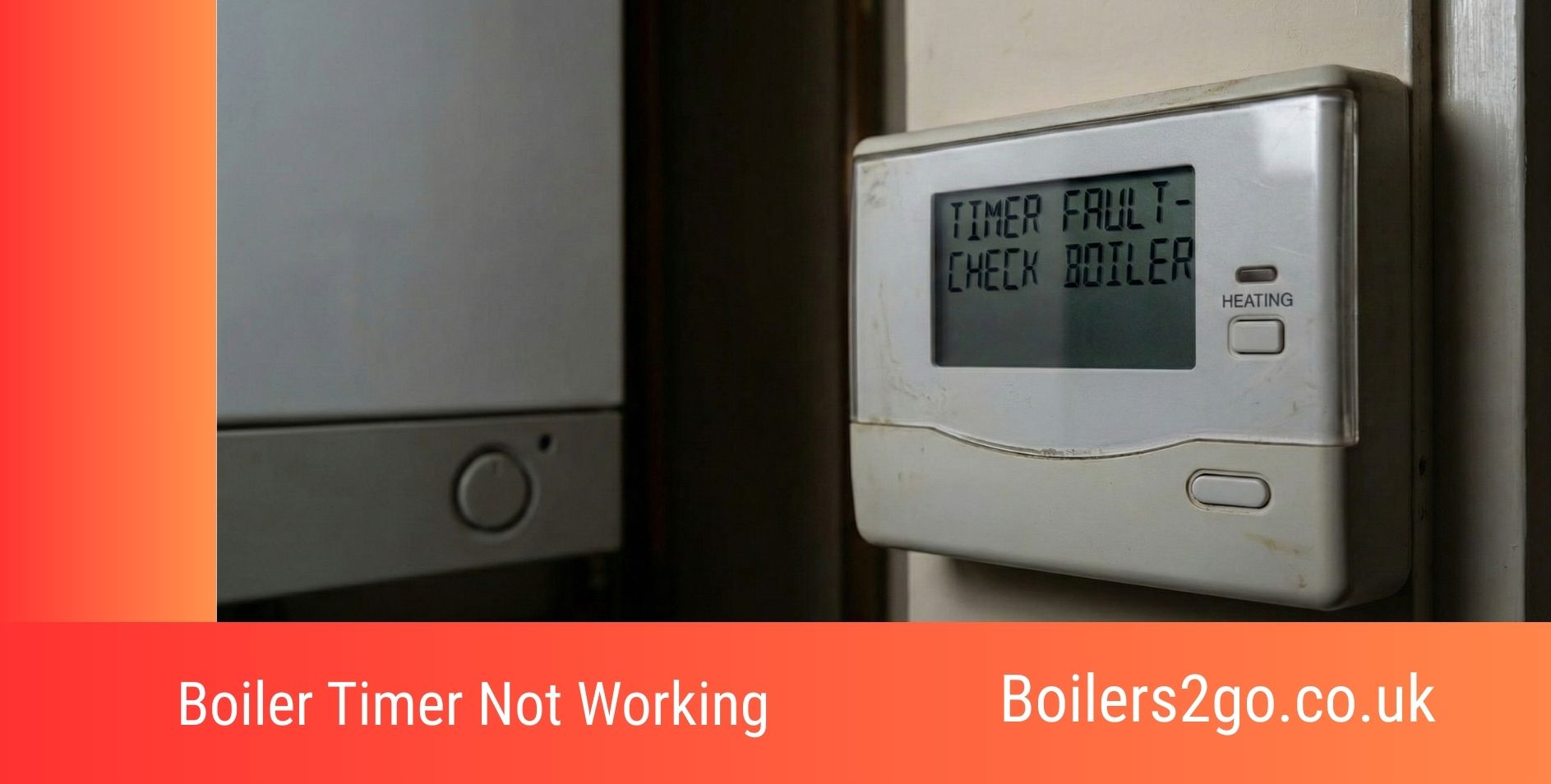
A boiler timer not working can throw off a home’s entire heating schedule, which is especially frustrating during colder months. This common issue often stems from simple faults like power disruptions or incorrect settings, but understanding the root cause is key to restoring efficient operation.
If you have a Vaillant boiler showing an egg timer symbol, that is a different issue; our guide to the egg timer on a Vaillant boiler explains what it means.
This guide explains what a boiler timer does, the common reasons a boiler clock stops working properly, and step-by-step fixes to get the heating programmer back on track, all while prioritising safety.
Get a boiler cover, repair and annual service plan online here >
What Are the Common Causes of a Boiler Timer Not Working?
Common causes of a boiler timer not working range from electrical glitches to simple user error, often linked to the UK’s variable weather and power grid.
The sections below cover each potential issue in turn, drawing on typical UK boiler setups such as Worcester Bosch or Vaillant models.
Power Supply Issues
Power supply issues occur when there is an interruption in electricity reaching the boiler timer, such as from a blown fuse, a tripped circuit breaker, or a general lack of power.
This is common in older UK properties with outdated wiring, or during storms that cause outages, and it can reset all the timer’s settings along with cutting off heating.
How to Fix Power Supply Issues
- Check the consumer unit, or fuse box, for any tripped switches. Look for ones sitting in the off position and flip them back to on.
- If a fuse is blown, indicated by a broken wire inside or discolouration, switch off the main power at the isolator switch, use an insulated screwdriver to remove the old fuse, and replace it with one of the same amperage rating, commonly 3A or 5A for boilers.
- Restore power and test the timer. If the boiler was affected by a power cut, perform a soft reset by turning it off at the wall switch for 60 seconds before switching it back on.
- Always prioritise safety. If unsure about handling electrical components, stop and consult a qualified electrician rather than risk a shock or further damage.
Incorrect Time Settings
Incorrect time settings happen when the boiler clock drifts or is not manually adjusted, particularly around seasonal changes such as switching between British Summer Time and Greenwich Mean Time.
Older mechanical timers in UK homes do not auto-adjust, which leads to mismatched schedules where heating fires at the wrong hours.
How to Fix Incorrect Time Settings
- On digital models, locate the control panel, press the set clock or time button, use the arrow keys to adjust hours and minutes, including AM/PM if applicable, and confirm with enter or set.
- On mechanical timers, rotate the dial clockwise until the arrow aligns with the current time, ensuring the tabs are positioned correctly for on and off periods. Each tab usually represents 15 minutes.
- Refer to the boiler manual, often available online via the manufacturer’s site, for model-specific steps, such as those for Ideal or Baxi boilers.
- After making adjustments, advance the timer manually to check whether heating activates as expected.
Low or Dead Batteries
Low or dead batteries affect battery-powered boiler timers, common in wireless or portable units, causing the display to fade, freeze, or lose settings entirely.
In humid UK climates, batteries can corrode faster, which makes this a particularly common issue for landlords managing multiple properties.
How to Fix Low or Dead Batteries
- Isolate power to the boiler for safety before starting.
- Open the timer compartment as per the user manual, usually by removing a cover with a screwdriver, and note the battery type, often AA or AAA.
- Remove the old batteries, clean any corrosion with a dry cloth, and insert fresh ones, checking the polarity is correct.
- Reassemble, restore power, and reprogram the timer. If it still fails after a fresh set of batteries, that points to a deeper electrical issue.
Programming Errors
Programming errors arise from accidental changes or overly complex settings that confuse the timer, such as overlapping schedules or a forgotten override left switched on.
This is common on smart-enabled systems, or simply for new homeowners who are not yet familiar with their boiler’s interface.
How to Fix Programming Errors
- Reset the timer to factory defaults if the option is available, often by pressing and holding a small pinhole reset button with a paperclip for 5 to 10 seconds until the screen blanks and restarts.
- Reprogram step by step. Select program mode, set on and off times for heating and hot water separately, for example 7am to 9am for mornings, and assign these to specific days if it is a 7-day timer.
- Check the manual for guidance on zones if the system has underfloor heating or multiple radiator zones, then test by simulating a schedule to confirm the boiler responds correctly.
Mechanical or Digital Faults
Mechanical or digital faults include a timer running slow or fast, a frozen screen, or unresponsive buttons, often due to wear and tear in ageing UK boilers over 10 years old. When an old timer is beyond repair, replacing it with a modern programmable control is often the simpler fix — our guide to EPH Controls thermostats looks at one widely fitted range that works with most UK boilers.
Dust build-up or a software glitch in digital versions can mimic these same symptoms.
How to Fix Mechanical or Digital Faults
- Start with cleaning. Switch off power, then gently wipe buttons and dials with a soft, dry cloth to remove dust, avoiding any liquids.
- For slow or fast running, recalibrate per the manual, such as advancing the dial manually on mechanical models.
- If frozen, perform a hard reset by powering off for several minutes. For persistent unresponsiveness, the timer may need replacing, and a Gas Safe engineer should check compatibility, since DIY swaps on integrated units risk voiding the warranty.
Dust and Debris Accumulation
Dust and debris accumulation clogs buttons or dials, which is common in UK homes with poor ventilation, leading to stuck mechanisms or erratic behaviour in the boiler programmer.
How to Fix Dust and Debris Accumulation
- Isolate the boiler’s power first.
- Use a soft brush or compressed air to clear visible dirt from crevices, then wipe with a lightly damp cloth, making sure it is dry before re-powering.
- Avoid abrasive tools that could scratch components. If build-up is severe on the inside, that points to a need for professional servicing to prevent it recurring.
Loose or Faulty Wiring
Loose or faulty wiring involves damaged connections between the timer and the boiler, often from vibrations or a poor original installation, and this poses a genuine risk in rented UK properties where maintenance can occasionally lapse.
How to Fix Loose or Faulty Wiring
This is not a DIY job unless properly qualified, since it involves electrical hazards. A visual inspection of accessible wires for fraying is fine, but any actual repair needs a Gas Safe registered engineer, who can secure connections, replace damaged cables, and test for safety in line with UK building regulations.
Related Boiler Timer Fault Guides
A timer fault sometimes overlaps with, or is mistaken for, a handful of other common boiler problems. The guides below cover the most closely related issues.
If the boiler is not responding to the timer at all, check for thermostat and boiler communication problems, which can look like a timer fault from the outside.
If the reset in the power supply section above does not help, our guide to no power to boiler covers further electrical causes worth checking before booking an engineer.
If the timer itself seems fine but the thermostat or wireless receiver still won’t switch the boiler on, our guide to boiler controls not working covers the wider checks.
How to Prevent Boiler Timer Issues in the Future
Scheduling annual servicing by a Gas Safe engineer helps catch wear early, including cleaning and battery checks, before they turn into a full timer failure.
Adjusting clocks promptly for time changes, using surge protectors against power fluctuations, and opting for digital timers with auto-adjust features all reduce how often these issues crop up.
Homeowners and landlords should also keep manuals handy and test schedules monthly to maintain reliable heating performance and avoid an unexpected breakdown.
When Should You Call a Gas Safe Engineer About a Boiler Timer?
A Gas Safe engineer must be called when basic fixes fail, if there is a smell of gas, unusual boiler noises, or a suspected wiring or gas line fault, since these can indicate serious safety risks.
In the UK, only Gas Safe registered professionals can legally handle gas appliances, so it is worth confirming registration via the Gas Safe Register before booking anyone, especially if the boiler is still under warranty or the property is tenanted, since landlords have a legal obligation to keep gas safety records up to date.
Boiler Timer Not Working: FAQs
How Can I Tell If My Boiler Timer Is Compatible with a Smart Thermostat Upgrade?
Checking compatibility involves matching the boiler model against the smart device’s own specifications, such as Hive or Nest systems popular in the UK. The manufacturer’s online compatibility tool, or a professional installer, can confirm whether integration is possible without rewiring. Our guide to the best smart thermostats for boilers compares the most popular options and what each one needs.
Will a Faulty Boiler Timer Affect a Home Insurance Claim?
It might, if neglect, such as skipping annual maintenance, is shown to be the cause, since this can potentially void cover for related damage. UK policies often require evidence of regular upkeep, so keeping servicing records on file strengthens any future claim.
What Are the Energy-Saving Benefits of a Programmable Boiler Timer?
A programmable boiler timer can reduce unnecessary running time by up to 20% by aligning heating with actual occupancy patterns. This lowers both bills and carbon footprint, and the saving is particularly noticeable in larger homes or for landlords managing several properties.
How Do Weather Conditions Affect Boiler Timer Reliability?
Power surges from storms, or humidity causing corrosion in exposed units, are both common in the UK’s variable climate and can affect timer reliability. Protective covers and keeping the unit indoors where possible help reduce these effects.
Can a Boiler Timer Be Integrated with Home Automation Systems?
Yes, provided it is a compatible digital model. Systems such as Amazon Alexa or Google Home can enable voice-controlled scheduling on units with OpenTherm or Wi-Fi enabled features, allowing remote adjustments via an app.
How Much Does It Typically Cost to Replace a Faulty Boiler Timer?
A straightforward like-for-like timer or programmer replacement typically costs between £80 and £200 including labour, depending on whether it is a standalone unit or integrated into the boiler’s own control panel. Integrated units on newer boilers can cost more if the whole control board needs replacing rather than just the timer function.
Is It Normal for a Boiler Timer to Reset After Every Power Cut?
Many basic and older timers do lose their programmed schedule after a power cut unless they have a battery backup, which is a normal limitation rather than a fault. Digital timers with battery backup or smart, cloud-connected models generally retain their schedule through a power interruption, which is worth considering when replacing an older unit.

I’m Penny North, a home energy heating expert. My mission is to demystify new boilers and complex heating systems to help you achieve a warm, cosy home with lower energy bills and a smaller environmental footprint.