

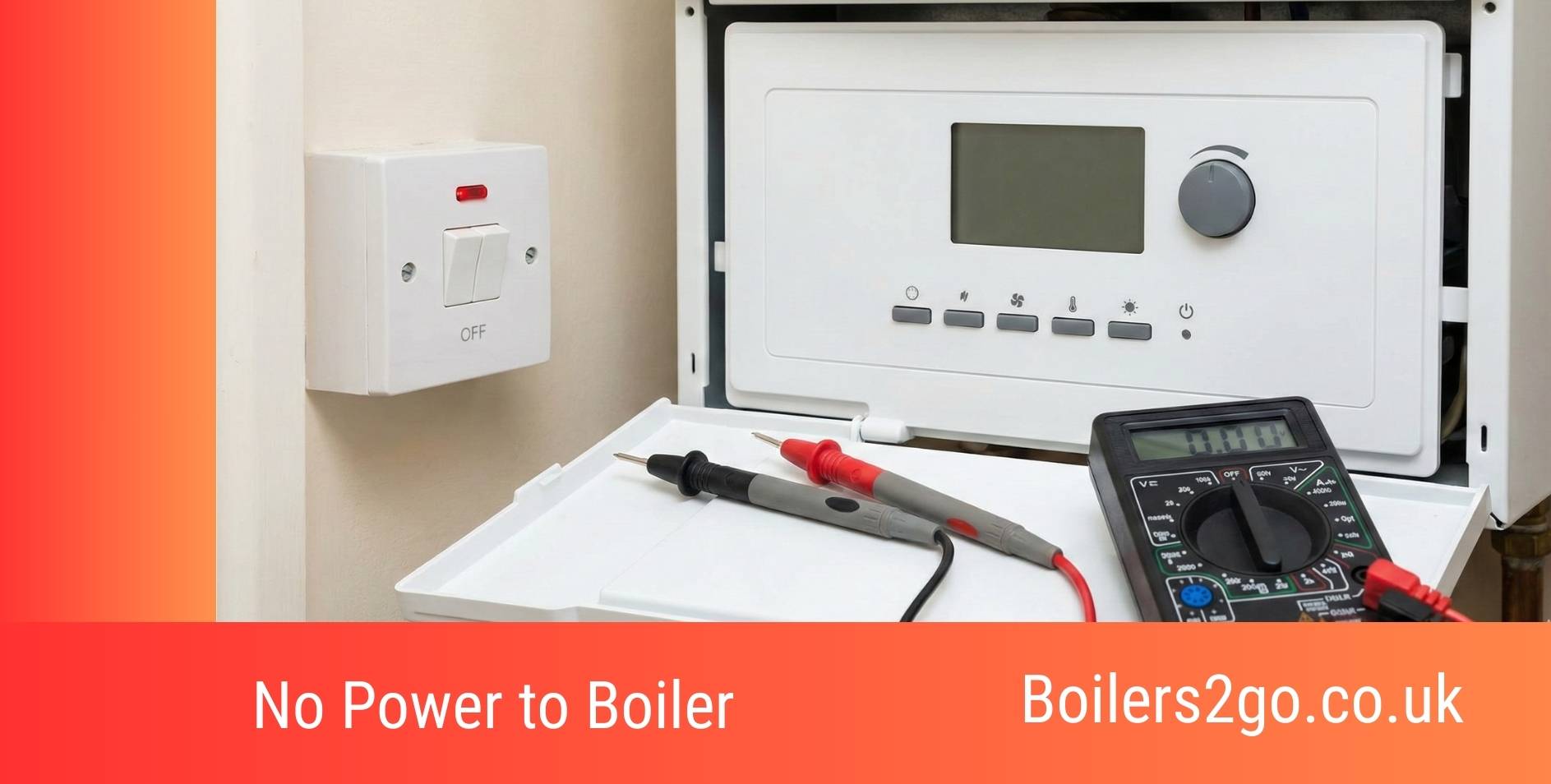
No power to the boiler is one of the most common heating problems UK homeowners and landlords run into, especially during winter. It can stem from anything as simple as a tripped switch to a genuine internal fault.
This guide walks through the most likely causes in order, starting with the simplest, along with practical checks for each and when it’s time to call a qualified engineer or electrician.
If electrical faults keep cutting off your heating, a boiler cover, repair and annual service plan bundles repairs and servicing together.
Why Is There No Power to My Boiler?
No power to a boiler usually stems from a disruption in the electrical supply or a component failure within the system itself. Working through the causes below in order is the fastest way to find the culprit, rather than jumping straight to the most serious possibility.
Checking for a General Power Cut
Power cuts are a frequent reason boilers stop responding.
If your entire home has lost power, or other appliances aren’t working either, it’s likely a wider outage affecting your area. In the UK, these can happen due to storms, planned maintenance by your network operator, or grid overloads.
To confirm whether it’s a wider issue, check powercut105.com or call 105, the free national number that connects you to your local electricity network operator. If it’s a widespread outage, your boiler should come back on by itself once power returns.
For landlords, it’s worth having a contingency plan, such as telling tenants how to reset the boiler once electricity is restored.
Has the Circuit Breaker Tripped?
A tripped circuit breaker is another common reason for no power to the boiler, and it’s easy to check yourself.
This usually happens when there’s an overload or short circuit somewhere in the home’s electrical system, which cuts power to protect against fires. Boilers can trigger this if they’re sharing a circuit with other heavy-demand appliances, such as a washing machine.
Head to your consumer unit, the fuse box, and look for any switches sitting in the off or middle position. Flip them back to on. If it trips again immediately, don’t keep resetting it, since that usually points to a deeper electrical fault.
If you’re at all unsure, call a qualified electrician rather than repeatedly resetting the switch. Landlords should treat this as a maintenance issue falling under their responsibilities.
Get a quote today and take the stress out of replacing your boiler. At Boilers2Go, we offer fast, reliable installation across the UK - often as soon as the next day. 
Need a new boiler?
Resetting the Breaker Safely
Wear rubber-soled shoes and make sure your hands are dry before touching the consumer unit. If the breaker trips repeatedly, it may point to a faulty component inside the boiler drawing too much current. A seizing pump motor can be one culprit, and it often gives itself away first with the grinding or humming described in our guide to a noisy central heating pump.
Is the Boiler Fuse Blown?
A blown fuse in the boiler’s plug or internal wiring is a less obvious cause of no power, and it’s more common than many people expect.
Fuses act as safety valves, blowing to prevent damage from power surges. This is more common in older UK homes where the wiring isn’t up to modern standards.
To check, unplug the boiler if it’s a plug-in model and inspect the fuse, replacing it with a 3-amp fuse if it looks blackened or broken. On combi and system boilers the fuse is often inside the unit itself, so consult the manual and never open the casing unless you’re Gas Safe registered.
Swapping the fuse resolves many cases. If it blows again straight away, that points to a deeper fault needing professional attention rather than another fuse swap.
Could the Timer or Programmer Be Faulty?
A faulty timer or programmer is a common cause of no power reaching the boiler, particularly on older programmable systems.
These devices control when the heating switches on. If they’ve become glitchy from wear or a power surge, they can stop electricity flowing to the boiler at the right time, or at all.
Test this by overriding the timer to a constant-on setting. If the boiler powers up, the programmer likely needs replacing; our guide to a boiler timer not working covers the other checks worth doing before you buy a replacement part.
Landlords should budget for these replacements to keep tenants warm and avoid complaints, and should check compatibility carefully, since Worcester Bosch and Vaillant models often use different programmers.
Upgrading to Smart Controls
A smart thermostat that integrates properly with the boiler can reduce future no-power scenarios, since app-based diagnostics often flag a fault before it causes a full lockout.
Is There a Problem with the Thermostat?
A malfunctioning thermostat can mimic no power to the boiler by simply failing to signal the unit to start, which is a subtle but usually fixable issue.
If your room thermostat isn’t detecting the cold, or the boiler’s own thermostat is stuck, it won’t send the command to fire up. Start by turning the thermostat up. If nothing happens, check the batteries on wireless models or the wiring on wired ones, and clean or replace any corroded contacts.
If the thermostat and boiler still aren’t talking to each other after these checks, our guide to a thermostat and boiler not communicating covers wiring and pairing issues in more detail.
Are There Wiring or Connection Issues?
Loose or damaged wiring is a more serious cause of a boiler losing power, often stemming from age or a poor original installation.
In older UK homes, particularly Victorian properties, wires can fray or connections loosen over time, interrupting the electrical flow to the boiler.
Visually inspect any accessible wiring for obvious damage, but never touch anything that might be live. Call an electrician immediately if you spot fraying or scorching. Preventive checks during an annual Gas Safe service catch most of these issues early, which saves on repair costs and helps keep warranty terms valid.
Professional Wiring Inspection
A qualified electrician uses proper test equipment to check continuity throughout the wiring, which is the only reliable way to rule out a hidden fault safely.
Has the Boiler Gone Into Lockout Mode?
A safety lockout can look exactly like no power from the outside, but it’s actually the boiler protecting itself.
Lockouts are usually triggered by low pressure, overheating, or a specific component fault, and are common on modern condensing boilers as a built-in safeguard. Our boiler lockout guide covers the common triggers and how to clear them.
To reset, press the reset button, checking your manual first since brands like Ideal or Baxi use slightly different sequences. If it locks out again straight away, note any error code shown and call an engineer rather than repeatedly resetting it.
When Should You Get a New Boiler Quote?
If you’ve tried the fixes above and still have persistent no-power problems, it may be time to consider a replacement, especially on a unit over 10 years old where efficiency is already declining.
Boilers 2 Go offers free, no-obligation quotes on new, energy-efficient models. Whether you’re a homeowner looking to cut bills or a landlord ensuring compliance with UK regulations, we can suggest A-rated combi boilers that resolve recurring power issues for good.
Related Problems That Look Like No Power to a Boiler
Not every fault that looks like no power actually is. A few related issues are worth ruling out if the symptoms don’t quite match what’s described above. For a wider overview, our guide to common boiler problems covers the faults homeowners run into most often.
If your boiler has power and is running but you’re not getting hot water at the tap, that’s a different fault, covered in our no hot water from boiler guide.
If the boiler has power but won’t fire up when it should, see our guide to a boiler not igniting.
A boiler that overheats and shuts down can look similar to a power fault from the outside; our boiler overheating guide explains what to check.
If your boiler keeps turning on and off rather than staying off completely, that’s boiler short cycling rather than a power fault.
A failed pump can also make a boiler seem unresponsive even though power is reaching it; see our guide to a boiler pump not working.
No Power to Boiler: FAQs
How Can I Prevent No Power to My Boiler in Future?
Scheduling an annual Gas Safe service helps spot electrical weaknesses early, and fitting a surge protector guards against the power spikes that UK winter weather can bring.
What Role Does My Energy Supplier Play in Boiler Power Problems?
Your energy supplier isn’t usually the cause, since power cuts are managed by your local network operator rather than your supplier. If outages in your area are frequent, it’s worth checking with your network operator directly rather than switching supplier.
Are There Seasonal Factors That Increase the Risk of No Power to My Boiler?
Yes. Winter storms and higher electricity demand both increase the chances of a power cut affecting your boiler, so a pre-season check and insulating any exposed wiring are worth doing each autumn.
How Does Boiler Age Affect Power Reliability?
Older boilers, typically over 15 years old, are more prone to electrical faults simply because components wear out. This is one of several reasons an upgrade becomes worth considering as a boiler gets older.
Can Smart Home Devices Help Diagnose No Power to a Boiler?
Yes. Smart plugs or monitoring apps can alert you the moment power drops to the boiler, which means quicker troubleshooting rather than only noticing once the house has gone cold.
Does a Power Cut Reset My Boiler’s Settings?
Usually not the core settings, but the clock and any programmed timer schedule may need resetting once power returns, particularly on older models without a battery backup.
Can I Test Whether the Fault Is My Boiler or My Home’s Wiring?
To a point. Checking whether other appliances work on the same circuit, and testing the socket the boiler is plugged into with another device, can help narrow things down. Anything beyond that, especially opening the boiler casing or testing wiring directly, needs a qualified electrician or Gas Safe engineer.
Get a quote today and take the stress out of replacing your boiler. At Boilers2Go, we offer fast, reliable installation across the UK - often as soon as the next day.
Need a new boiler?

I’m Penny North, a home energy heating expert. My mission is to demystify new boilers and complex heating systems to help you achieve a warm, cosy home with lower energy bills and a smaller environmental footprint.